About
Articles
Interview
Artworks on sale
Mandy lane
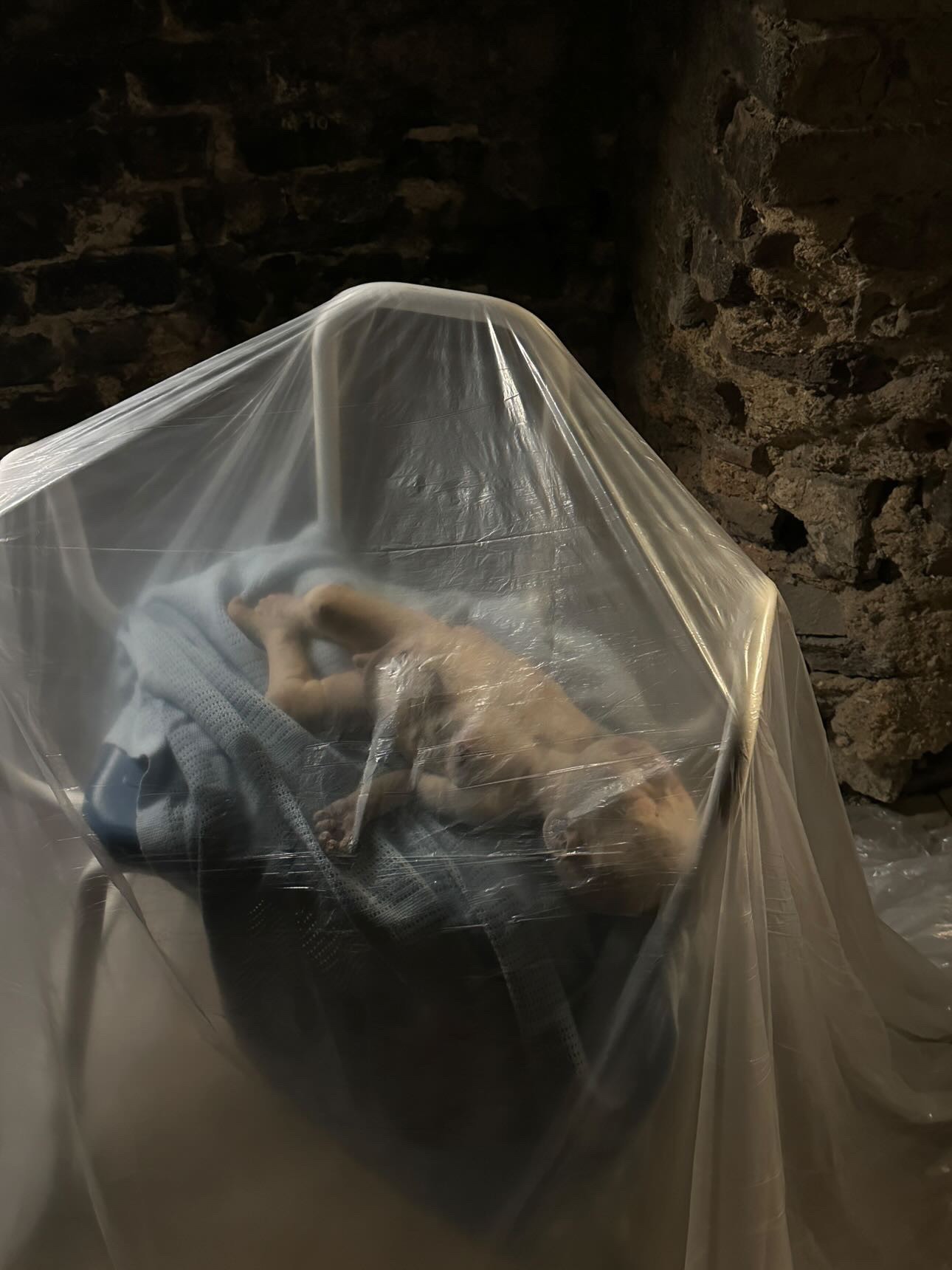
Mandy Lane (b.1980) is a British multidisciplinary artist who recently graduated with an MA in Sculpture from the Royal College of Art. Working across figurative sculpture and installation, her practice interrogates the socio-cultural landscape of the ‘othered,’ critically examining themes such as compulsory motherhood in relation to Robert McRuer’s concept of compulsory able-bodiedness and heterosexuality. Through this lens, her work invites reflection on the cultural architectures that sustain societal norms and exclusions.
Lane’s recent practice is deeply informed by crip theory—an academic and activist framework that challenges normative understandings of disability and embodiment. A pivotal shift occurred following her son’s diagnosis with Baló’s concentric sclerosis, which catalysed a more profound engagement with the politics of care, visibility, and systemic exclusion.
About
Articles
Interview
Artworks on sale
Mandy lane
Mandy Lane (b.1980) is a British multidisciplinary artist who recently graduated with an MA in Sculpture from the Royal College of Art. Working across figurative sculpture and installation, her practice interrogates the socio-cultural landscape of the ‘othered,’ critically examining themes such as compulsory motherhood in relation to Robert McRuer’s concept of compulsory able-bodiedness and heterosexuality. Through this lens, her work invites reflection on the cultural architectures that sustain societal norms and exclusions.
Lane’s recent practice is deeply informed by crip theory—an academic and activist framework that challenges normative understandings of disability and embodiment. A pivotal shift occurred following her son’s diagnosis with Baló’s concentric sclerosis, which catalysed a more profound engagement with the politics of care, visibility, and systemic exclusion.
For further information and general enquiries:
info@spira9.art
Copied
© 2026 SPIRA9 ART. All rights reserved.
SPIRA9 Ltd is registered in England and Wales. Company No. 16053380
For further information and general enquiries:
info@spira9.art
Copied
© 2026 SPIRA9 ART. All rights reserved.
SPIRA9 Ltd is registered in England and Wales. Company No. 16053380
For further information and general enquiries:
info@spira9.art
Copied
© 2026 SPIRA9 ART. All rights reserved.
SPIRA9 Ltd is registered in England and Wales.
Company No. 16053380